 Television Watch
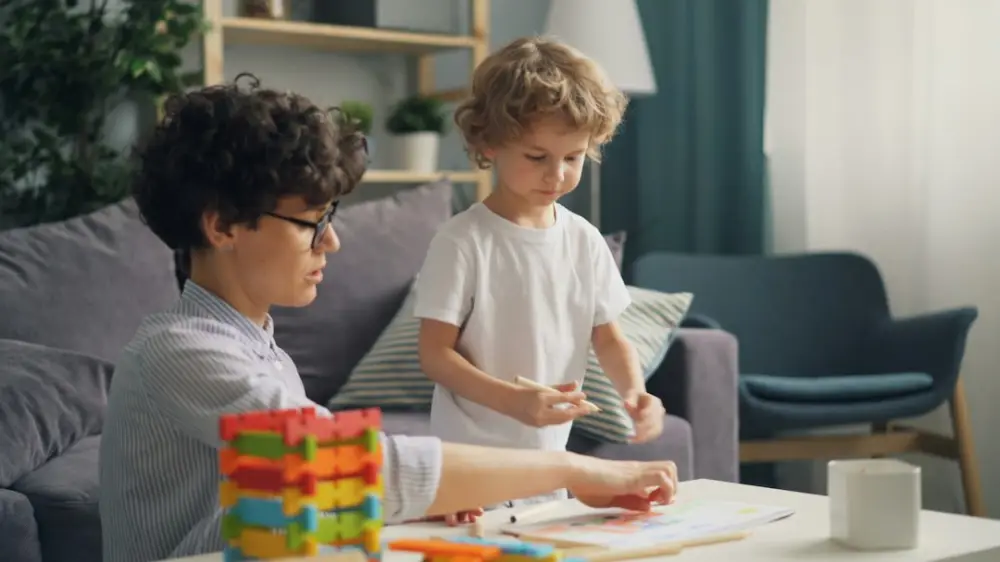
Verifying factual claims in educational kids’ programs involves cross-referencing televised information with peer-reviewed sources to ensure scientific, historical, or social accuracy. This process helps parents and educators distinguish between evidence-based instruction and misleading entertainment. By teaching children to evaluate credibility, we foster essential media literacy skills that protect them from misinformation in the 2026 digital environment.
It is helpful to treat educational shows as a starting point for inquiry rather than an absolute authority. When a program makes a specific claim about biology or history, parents can use that moment to model research behaviors. This approach turns passive viewing into an active learning session that builds critical thinking and helps help children recognize advertising and sponsorship within their favorite shows.
Where to begin with media verification at home
Establishing a routine for checking facts helps normalize critical thinking during screen time. Use these concrete actions to turn a standard viewing session into a lesson in media literacy:
- Start by selecting one specific "wow" fact from a show that your child found particularly interesting or surprising.
- The first step in the research process is to pause the program and ask your child where they think the show's creators found that information.
- To begin the actual verification, open a trusted, age-appropriate educational database or library resource to see if the claim is supported by current research.
- Next, use the opportunity to help children recognize advertising and sponsorship that might be influencing how the information is presented.
- Finally, discuss whether any persuasive media techniques were used to simplify the truth for the sake of entertainment.
How to Verify Claims in Children’s Programs
Verifying information does not have to be a chore. It can be integrated into the viewing experience as a collaborative game. When a show presents a "fact" that seems surprising or overly simplified, use the following steps to check its validity:
- Identify the specific claim: Pinpoint exactly what the show is asserting, such as "sharks never sleep" or "the Great Wall of China is visible from space."
- Check the production credits: Look for educational consultants or partner institutions listed in the credits. Shows produced in association with organizations like the National Science Foundation or PBS often undergo more rigorous vetting.
- Cross-reference with primary sources: Use reputable databases or government websites (like .gov or .edu sites) to confirm the data. For example, if a show discusses space, check the NASA website for current findings.
- Evaluate the age of the content: Scientific understanding evolves. A program produced in 2015 may contain outdated information regarding paleontology or technology compared to a 2026 update.
- Discuss the "Why": Ask the child why the show might have simplified the fact. Sometimes accuracy is sacrificed for the sake of a rhyming song or a simplified animation.
Center X and Educator Professional Learning
The UCLA Center X program provides a useful framework for how media literacy is being integrated into modern educator preparation. Center X focuses on social justice and pedagogical excellence, teaching educators how to guide students through the complexities of information consumption. For parents, this highlights the importance of professional learning in the media space.
When watching educational programs, look for content that aligns with these professional standards. High-quality media often mimics the inquiry-based learning models promoted by Center X, encouraging children to ask "How do we know this is true?" rather than just memorizing facts. If a program feels like it is merely lecturing without providing context, it may be a candidate for a deeper factual audit at home.
Jennifer Garner’s Once Upon a Farm Project
Celebrity-led initiatives often blur the line between educational content and brand promotion. Jennifer Garner’s "Once Upon a Farm" project is a prime example of a passion project that focuses on nutrition, agriculture, and healthy childhood development. While the content is often wholesome and informative, it is also a commercial venture. This presents a unique opportunity for identifying and discussing persuasive media with children.
When a show or digital segment features a celebrity advocate, parents should help children distinguish between the nutritional science being presented and the product being sold. For instance, if a segment discusses the benefits of organic soil, you can verify those claims through a university agricultural extension office. This ensures the child learns about biology and sustainability without automatically assuming a specific brand is the only source of health.
Assessing Authority: Science to Sports Coaching
The concept of the "authority figure" in kids' programming is diverse. You might see a "rocket scientist turned NFL coach" or a professional athlete teaching physics through sports. These profiles are engaging because they combine disparate fields, but they also require a check on expertise. A person may be an expert in aerospace engineering, but their claims about kinesiotherapy or sports psychology should still be verified against standard coaching practices.
Use these examples to teach children about the "halo effect," where expertise in one area makes a person seem authoritative in all areas. If a program features a guest expert, look up their actual credentials. This helps children understand that while someone can be multi-talented, factual claims in specialized fields like medicine or engineering require specific, up-to-date validation.
Tools for Spotting Media Misinformation
Several practical tools can assist families in the verification process. In 2026, many smart TVs and tablets offer integrated search features, but manual checking remains the most reliable method. Common Sense Media provides reviews that often flag educational inaccuracies or heavy-handed commercialism in popular shows.
For visual claims, reverse image searches can help determine if a piece of nature footage is real or CGI. Fact-checking sites like Snopes or the SciCheck department at FactCheck.org are also useful for debunking viral myths that often find their way into lower-budget educational videos. Encouraging a child to use a library's digital portal to find a book on the same topic is another excellent way to move from the screen to a more permanent, vetted source of information.
Television Watch: Promoting Accurate Kids' Media
Building a habit of factual verification transforms television from a passive medium into a tool for active intellectual growth. At Television Watch, we emphasize that parental involvement is the most effective filter for children’s content. While parental controls can limit what children see, they cannot always verify the accuracy of the information within a "green-lit" program. By engaging with these shows and questioning their claims, you help your children develop a healthy skepticism that will serve them across all forms of media.
Television Watch encourages families to look beyond the surface of educational labels. Whether it is a science show, a celebrity-backed nutrition segment, or a documentary, the goal is to foster a home environment where curiosity leads to verification. As we navigate the media options available in 2026, staying informed and critical ensures that "educational" viewing truly lives up to its name.